

Book Club: Vertical Growth
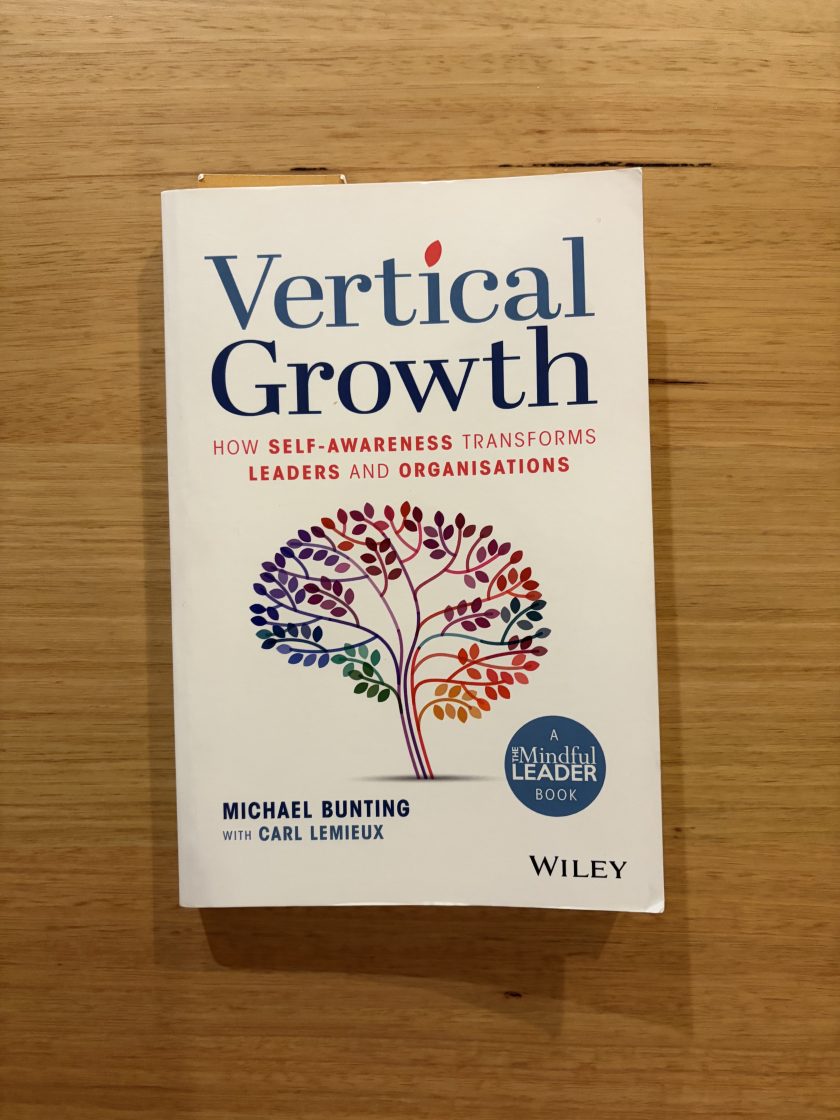
Vertical Growth: How self-awareness transforms leaders and organisations
Michael Bunting, author of The Mindful Leader, has partnered with Carl Lemieux to deliver a compelling follow-up that deepens the conversation on transformational leadership. As explored in earlier Even Keel Leadership blogs, self-awareness remains the cornerstone of effective leadership developmen – what Bunting describes as “the most important of all leadership skills.” This drew me to further explore his perspective on mindfulness and its role in leadership.If you struggle with giving or receiving feedback, this book is for you!
If you struggle with giving or receiving feedback, this book is for you!
Throughout the book, Bunting and Lemieux examine the fears, attachments, and assumptions that underpin much of our stress and behaviour. They skilfully connect fast- and slow-brain responses with frameworks such as the Johari Window, offering practical insight into how our internal world shapes the way we show up as leaders. The discussion on the neurological impact of mindfulness is particularly intriguing, shedding light on the physical changes that occur within the brain with consistent practice.
One concept that stands out early is the idea of identifying your “growth edge.” This resonated strongly with my experience working with the Operation Flinders Foundation, where we saw firsthand how stretching beyond comfort zones can drive meaningful personal development, particularly in the context of adventure therapy for disengaged youth.
Bunting also addresses the importance of respectful honesty in leadership, an area where many leaders encounter challenges. He highlights that conflict avoidance can undermine integrity and honesty, noting that “few of our clients realise that conflict avoidance violates the values of integrity and honesty.” The book reinforces that clear, honest feedback, when delivered thoughtfully, is a key driver of engagement and growth within teams.
Another valuable area of exploration is our unconscious assumptions. For those who haven’t yet examined this aspect of their thinking, it is well worth the effort. There is a growing body of literature and podcasts dedicated to this topic, and locally, Michelle Stanton offers practical insights into identifying and challenging our internal storytelling.
While I have yet to fully engage with the online tools provided to map a Vertical Growth journey, revisiting the book has prompted me to prioritise this. I look forward to exploring these resources further and incorporating them into my work with coaching clients.
Overall, this book offers a thoughtful and practical extension of Bunting’s work, reinforcing the critical role of self-awareness and mindfulness in leadership. It provides both conceptual depth and actionable insight for leaders committed to ongoing personal and professional growth. If you struggle with giving or receiving feedback, this book is for you!
You may also enjoy our earlier discussions on Book Club: The Mindful Leader


